A note to principals
Built for the partner whose name is on every seal.
We’re writing this page in first person because we think you should know who’s talking to you. Fermito is Sealed-Work Report Drafting built by engineers and operators, and the argument below is the argument we would make in person, not the argument a marketing team would write on our behalf.

Why we built it
Writing the first draft is the one part of sealed engineering work that isn’t engineering.
We spent months reading real field review reports across a library of 729 published examples before we wrote a single line of product code. What we kept seeing was a pattern that every principal already knows: the work a licensed engineer does on a site visit is engineering, the work they do an hour later at a keyboard is not.
Turning notes into prose is clerical. Walking the slab, reading the bearing, catching the thing that’s wrong on drawing S2.1, that’s the practice. The hour in between is the hour we wanted back, not for throughput, but for the part of your week where review actually happens. A draft reviewed at the end of a long day is a draft reviewed at half attention, and that is where details get missed.
So we built Fermito around a single conviction: every hour a licensed engineer spends writing the first draft is an hour they’re not reviewing. Fermito is a report-drafting assistant - it is never an author, and it never stands between the engineer and the seal. The responsibility line is the product, not a disclaimer bolted to the bottom of it.
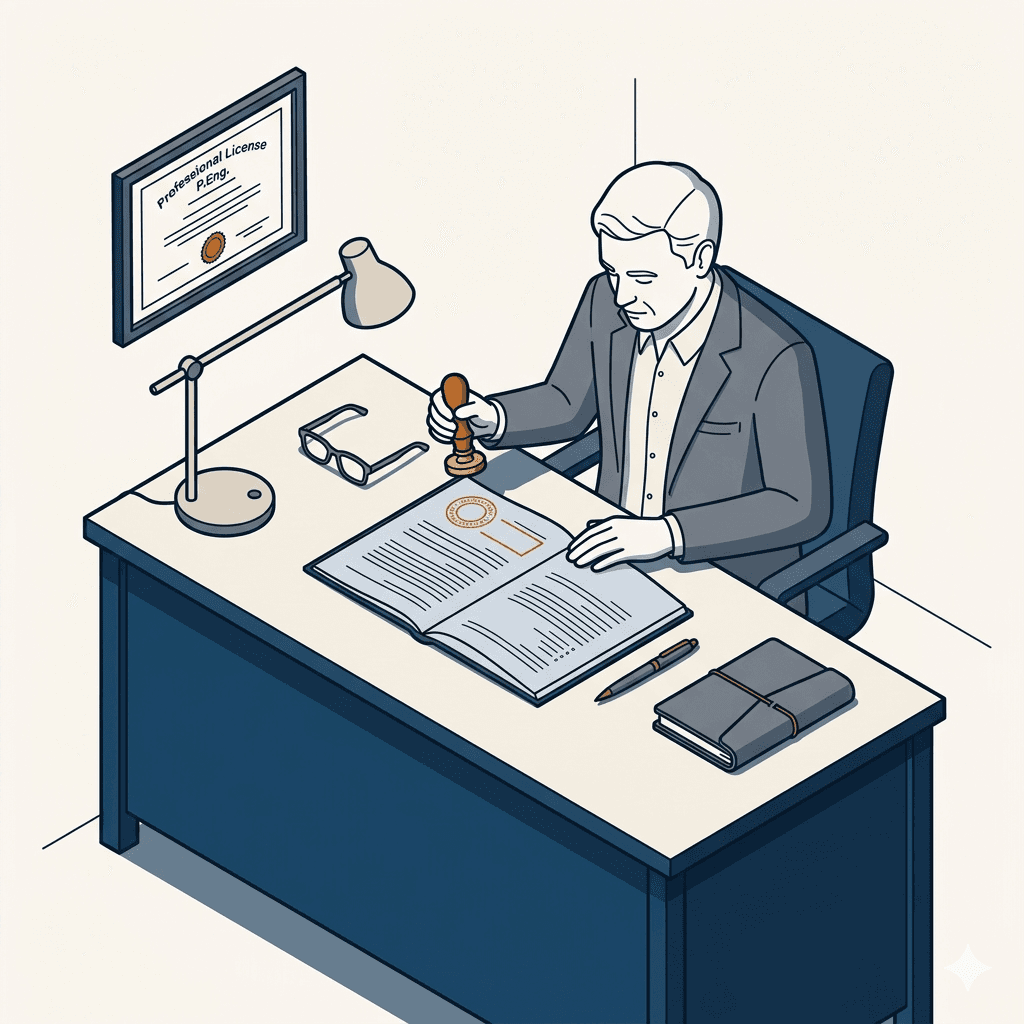
The seal stays with the engineer
What we think matters to you
Three things we wouldn't ship without.
We wrote the product around a principal's week, not a user's journey. Here's what that looks like in practice.
01 · Review hours back
The hours you get back are review hours, not report-writing hours.
We don’t market a percentage time saving because the point isn’t speed. It’s that the freed time flows into the part of the job only you can do. If Fermito meant your firm writes more reports per week, we’d have built the wrong thing.
02 · Sealed-work literacy
OBC 1.2.2.2 and PEO practice rules are in the prompt, not an afterthought.
Generic AI tools don’t know what a sealed engineering deliverable is. Fermito does, because we made regulatory literacy a first-class product concern. Your engineers don’t have to teach the tool what sealed work means.
03 · The firm’s own voice
Every revision teaches the system the way your firm writes.
Templates, standard callouts, house conventions: we tune all of them to your firm. The moat belongs to you, not to us. Leaving Fermito means losing months of captured voice, which is the price of doing the work we think is worth doing.
The questions we get first
Three things we’re asked in the first ten minutes of every demo.
These are the questions that come up on every call. We’d rather answer them in writing, slowly, than have you wait three days for a demo to find out what our answer is.
- “Am I liable if Fermito gets something wrong?”
- You're liable the same way you're liable when a staff engineer hands you a draft. You read it, you decide, you sign. Fermito doesn't change the chain of responsibility. It just means the first draft didn't cost ninety minutes of your senior time to produce. Every change a reviewer makes is captured in a diff, so the record of what moved between draft and seal is explicit rather than implicit.
- “What does PEO say about AI report-drafting tools?”
- PEO's practice bulletins are clear that field review, and every other sealed engineering deliverable, is practice of engineering, and practice of engineering stays with the licensed practitioner. We read that as a design constraint, not a loophole. Fermito is an assistant - it drafts, it suggests, it never submits or seals. The word "assistant" does real work in the product. Nothing is ever auto-sent, auto-signed, or auto-distributed. We wrote the responsibility framing before we wrote the code.
- “Will it match our firm's template?”
- Yes, and we think that's the part most AI tools get wrong. Your template isn't just a Word file. It's section order, standard callouts, the phrasing your principals have been sharpening for a decade. We ingest the actual Word template you ship today and tune the draft output to match it, down to the header, footer, signature block, and distribution list. The first draft a new firm sees on Fermito reads like the firm wrote it, because the firm did. Every revision teaches the system a little more of the house voice.
Live on Fermito
Sealed documents are running on Fermito today.
We’re happy to walk you through what a rollout looks like on a demo call.
Signed
We sign our writing because we ask engineers to sign theirs.
Every article, every product note, every page like this one carries the Fermito name, not an anonymous byline. We think a company that ships a tool for sealed engineering work should hold itself to the same standard it asks its customers to hold themselves to. If something on this page is wrong, write to us and we’ll fix it, and say what changed. The longer version of who we are, why we built Fermito, and the lines we won’t cross is written in the same voice on the about page.

The Fermito Team